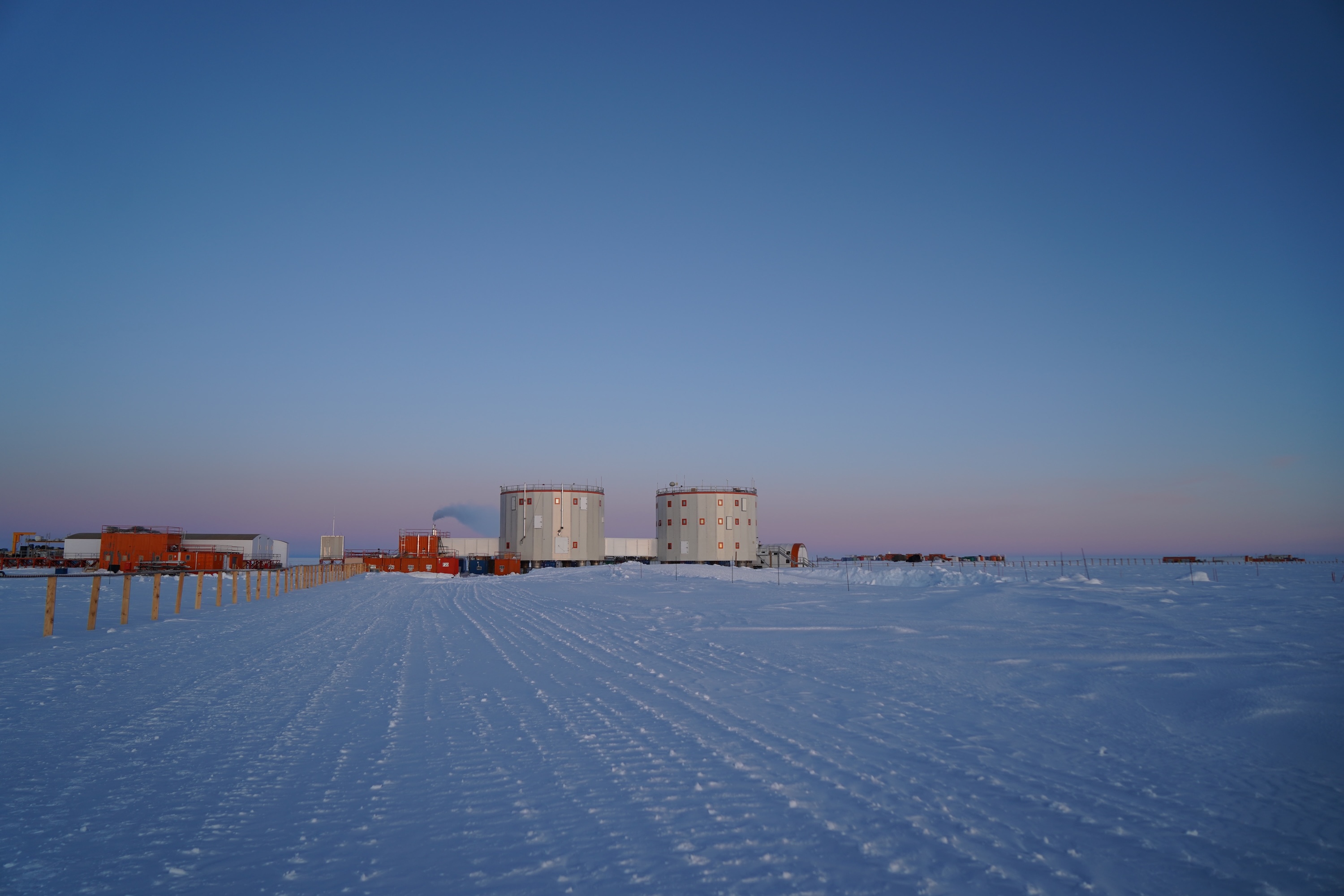
In this new study, published in PNAS, we deployed the SocioPatterns proximity sensors to one of the most extreme places on the planet: Antarctica. We tracked the social interaction dynamics of the crew at the Italian–French Concordia Station during a 10-month overwinter mission — one of the closest terrestrial analogues to future long-duration missions to the Moon and Mars.
We measured face-to-face interaction networks and combined these data with longitudinal psychological assessments to study how social interaction patterns evolve under prolonged isolation and confinement.
This was a great multidisciplinary collaboration led by Andrea Cantisani at the University of Bern and Jan Schmutz at the University of Zurich.